Last Night, Wembley Spoke Punjabi | Kandidly Kay
Last Night, Wembley Spoke Punjabi
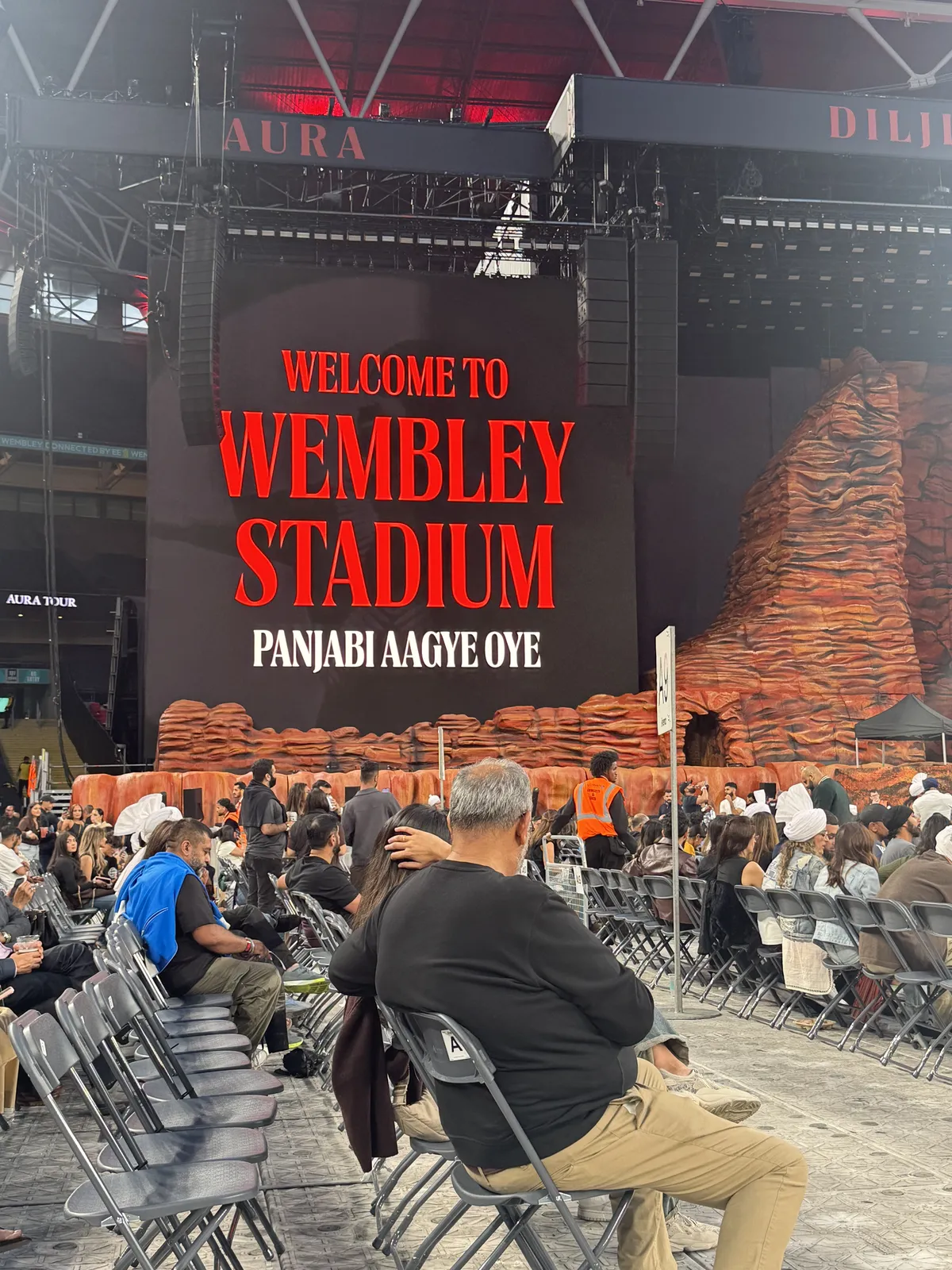
Last night, I stood inside Wembley Stadium wearing my pagh, surrounded by tens of thousands of people who shared my heritage, my language and my culture.
And I had a moment.
Not the screaming, dancing, filming-on-your-phone kind.
Although there was plenty of that.
A quieter one.
I looked around Wembley and thought:
Look how far we have come.
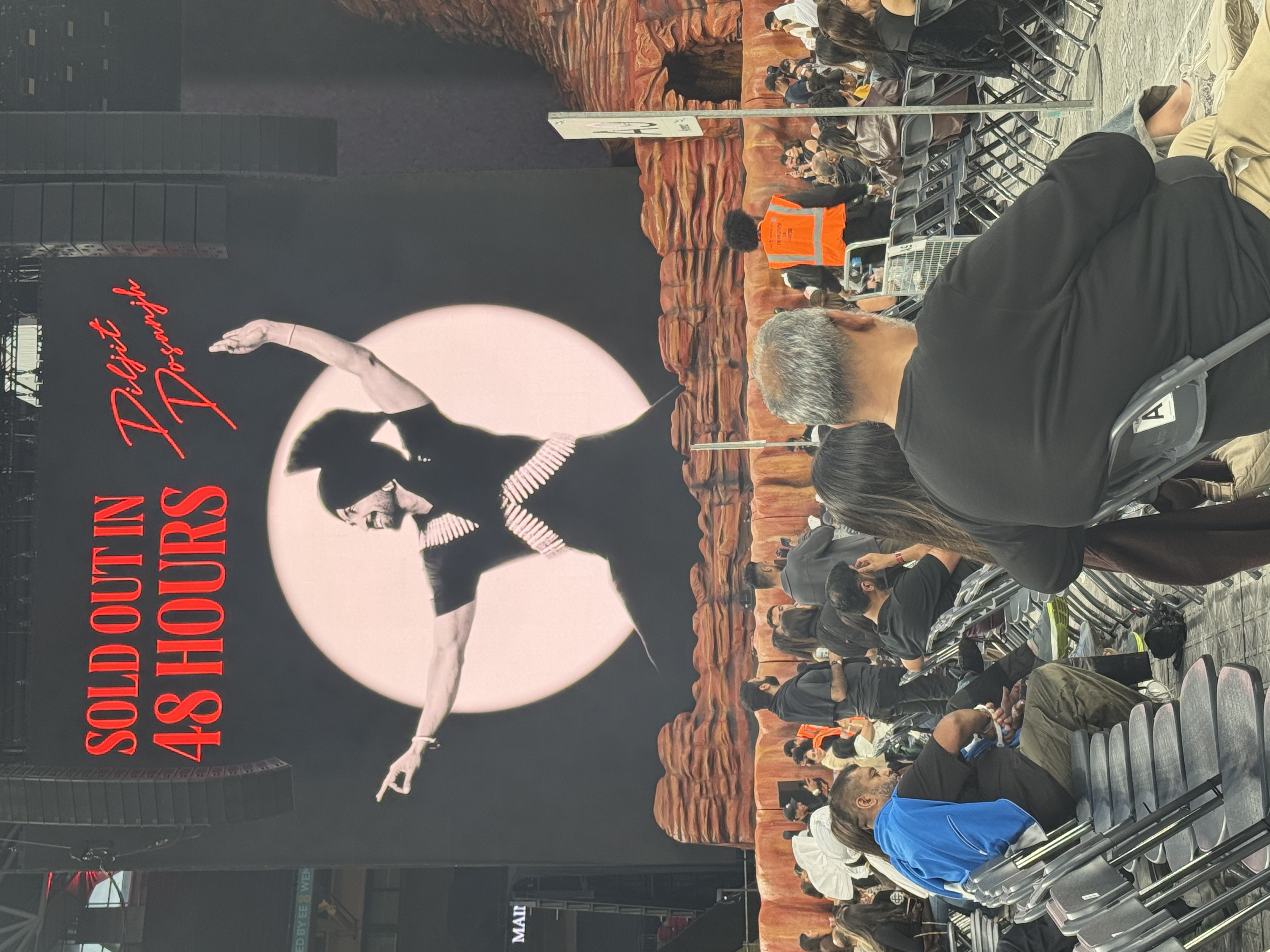
Diljit Dosanjh walked onto one of the most famous stages in the world as the first Punjabi artist to headline Wembley Stadium.
A Punjabi artist.
At Wembley.
For those of us who grew up in Britain with Punjabi parents, that carries a weight that is hard to explain.
We learned early how to live between worlds.
Punjabi at home.
English outside.
Indian food in the kitchen and fish fingers at school.
Bhangra at family parties.
Pop music with our friends.
British?
Punjabi?
Sikh?
Asian?
For years, it could feel as though you had to choose.
Last night, Wembley gave a different answer.
You can be all of it.
There was something extraordinary about hearing Punjabi music fill a stadium known across the world.
The language our parents and grandparents spoke.
The beats that filled our weddings.
The clothes.
The humour.
The swagger.
And that unmistakable Punjabi confidence.
None of it had been watered down.
Nobody was apologising for taking up space.
Punjabi culture was not waiting to be invited in.
It had taken over Wembley.
Diljit has not become globally successful by becoming less Punjabi.
He has done it by being unapologetically himself.
There is a lesson in that far beyond music.
So many of us spend parts of our lives editing ourselves to fit workplaces, relationships and spaces where we wonder whether being fully ourselves might be too much.
Too different.
Too cultural.
Too visible.
Then you watch a Punjabi man in a turban command Wembley while thousands sing Punjabi lyrics back to him, and you realise the things we sometimes minimise can become the very things that make us powerful.
I thought too about the generations before us.
The men and women who came to Britain, built lives, raised families and created opportunities their children would inherit.
I wonder what they would have thought if somebody had told them that one day a Punjabi singer would stand beneath the Wembley arch and an entire stadium would roar his songs back at him.
I think they would have been proud.
Last night was joyful, colourful and loud.
Of course it was.
We are Punjabis.
But beneath all of that celebration was something deeper.
Visibility.
Representation.
Possibility.
There will have been children inside Wembley last night who will never understand why seeing a Punjabi man on that stage felt remarkable.
Perhaps that is the greatest achievement of all.
For them, it may simply feel normal.
They will grow up believing Punjabi artists belong on the world’s biggest stages because they have already seen one standing there.
That is how representation works.
One generation celebrates the breakthrough.
The next grows up assuming the door was always open.
As I made the long journey home, I kept thinking about that sight.
Wembley.
Punjabi music.
Thousands upon thousands of us.
And my pagh on my head.
Last night was Diljit’s achievement.
But standing beneath the Wembley arch, listening to Punjabi fill one of the most famous stadiums in the world, it felt like something bigger too.
It felt like one generation looking back at how far we had travelled.
And another being shown just how far they could go.
Reflection Topics
Punjabi identity
Representation
Belonging
Heritage
Cultural pride
More Writing
More Than a City: Finding the Soul of Liverpool
/more-than-a-city-finding-the-soul-of-liverpool
Michael Jackson Was Never Just a Man
/michael-jackson-identity-reflection
The People Who Clap When The Plane Lands
/the-people-who-clap-when-the-plane-lands