Trial by Headline
Trial by Headline
There is something very human about wanting to know who is right and who is wrong.
We like certainty.
We like clear sides.
We like a story that makes sense quickly.
But justice rarely works like that.
This is why I find the work of The Secret Barrister so important. Their writing has helped pull back the curtain on Britain’s criminal justice system, not by making it simple, but by showing why it so often is not.
There was a time when courtrooms felt distant and mysterious. Most people would never step inside one unless called upon to do so.
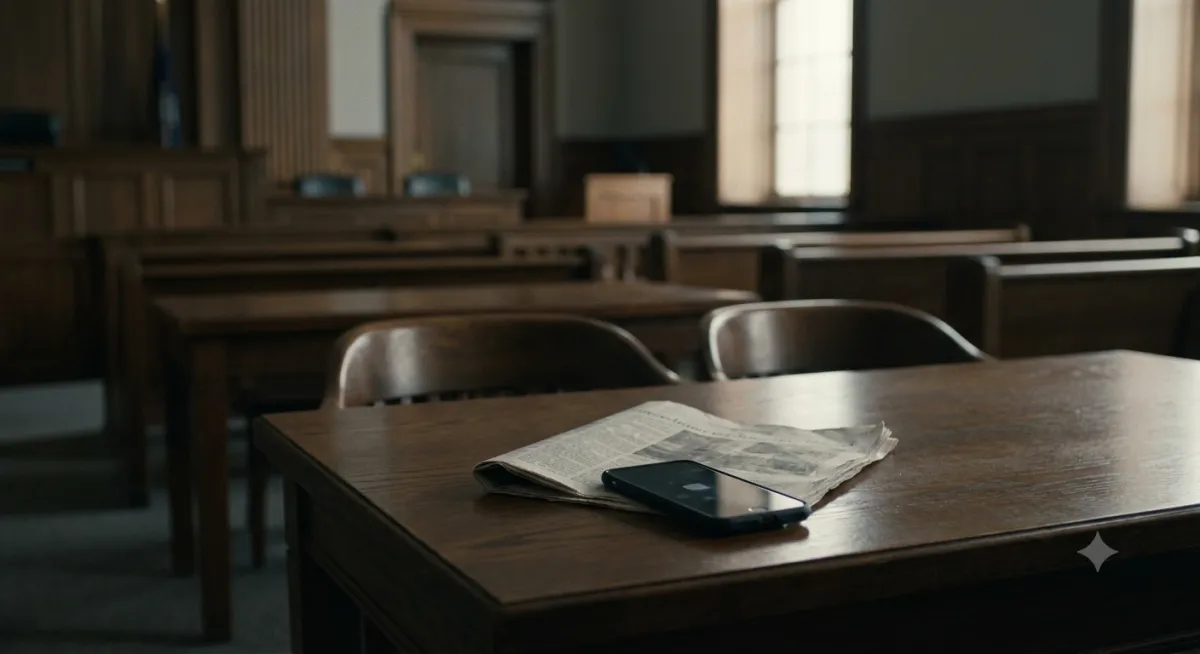
Now, many of us form strong opinions about legal cases from a headline, a social media post, or a short video clip shared online.
The problem is not that people care about justice.
They should.
The problem is that justice is rarely as straightforward as it first appears.
The Secret Barrister has consistently challenged the idea that legal cases can be reduced to neat stories of heroes and villains, right and wrong, guilty and innocent.
The reality is often far messier.
Evidence can be complex.
Legal arguments can be nuanced.
Critical facts may never appear in a headline.
Yet in an age of instant reaction, certainty is often treated as a virtue.
Social media rewards confidence.
It rewards speed.
It rewards strong opinions delivered in as few words as possible.
What it does not reward is patience.
How often do we read a headline and immediately decide what we think?
How often do we hear part of a story and convince ourselves we know the ending?
Increasingly, public opinion forms long before all the facts are known.
Nuance struggles to compete with outrage.
The result is a growing tendency to confuse confidence with understanding.
Justice is not entertainment.
It is not a popularity contest.
It is not a race to see who can deliver the quickest verdict from behind a keyboard.
It is a process designed to examine evidence, challenge assumptions and reach decisions based on facts rather than feelings.
That process is not perfect.
No system created by human beings ever will be.
Courts face enormous pressures. Delays remain a serious concern. Resources are stretched.
Yet despite its flaws, the principle at the heart of justice remains remarkably simple.
Evidence matters.
That principle feels increasingly important in a world where public debate is often driven by emotion, algorithms and attention spans measured in seconds.
Perhaps that is the lasting value of voices like The Secret Barrister.
They remind us to pause before rushing to judgment.
To question our assumptions.
To remember that there is often far more to a story than we first realise.
In a culture that increasingly rewards certainty, there is something quietly powerful about admitting we may not know the whole story.
And perhaps that is where real understanding begins.
REFLECTION TOPICS
Justice
Judgment
Social media culture
Nuance
Human behaviour